
Opinion

The era of spare change digital advertising is over.
Why spend less on digital when it can do so much for your brand?
Information consumption today is a strange beast. Half the world sits conveniently in cyberspace, waiting to be spoon-fed content. Yet many companies still primarily cast their line into the arguably less reliable pond of television and wait for high tide to hit. Granted, television advertising still works — but you’ll be paying top dollar to get eyes on your ad and there’s every chance people aren’t thinking twice about it.
The truth is, your business could be reaping rewards by spending a whole lot more on advertising and marketing in the digital space.
Data-led, targeted advertising has been kept on the fringes by a fear factor surrounding active and interactive audiences. As opposed to the more passive television delivery, digital is information overload on an intimidating scale. It offers more in-depth conversations with your audience, more data, less uncertainty — and not only can you decide who you want to see your ad, you can see who’s interested and who isn’t; who likes it and who doesn’t; what missed the mark and what hit the nail on the head.
Yes, everyone has a Facebook — but good strategic, integrated campaigns on digital platforms are still few and far between.
The current climate is scary because marketers and agencies can no longer lull themselves into the false sense of security that everything works. It’s daunting because the audience reaction is out of your control, and everything is laid bare for you to watch as it unfolds.
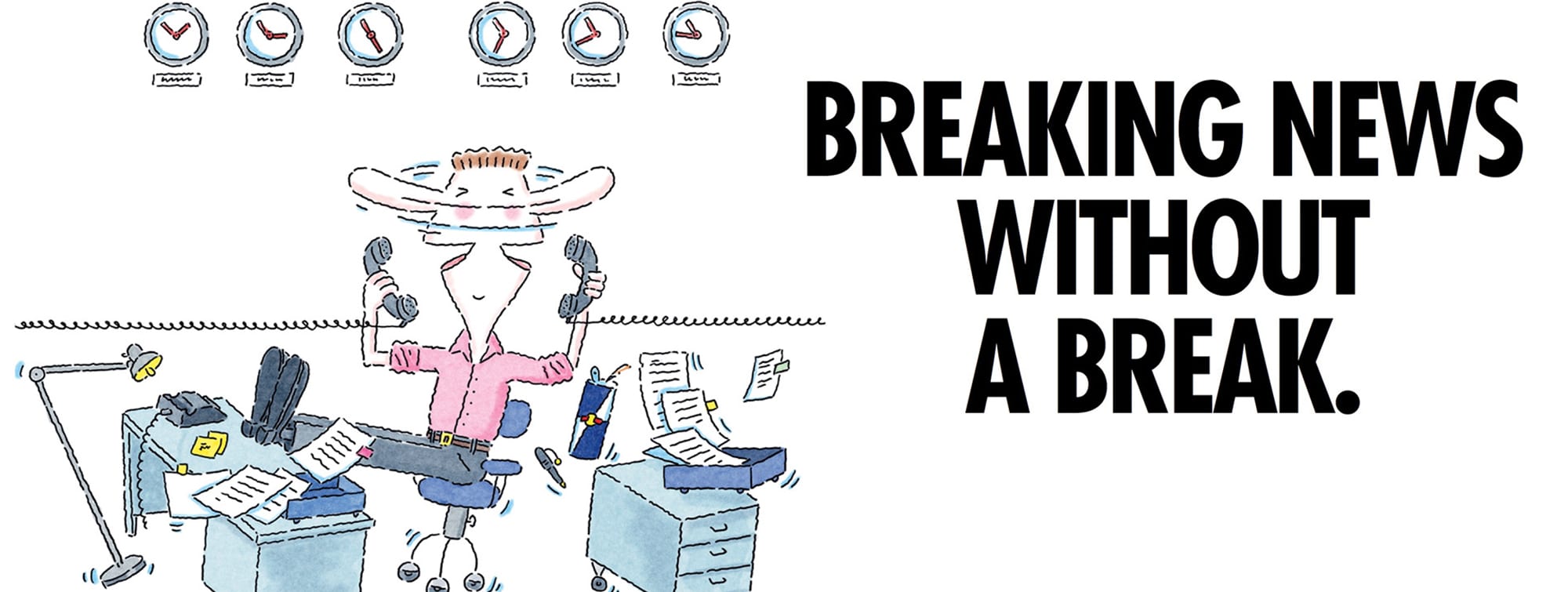
And so, the natural reaction has been a conservative approach. Many businesses feel that they should pay less for digital content than regular advertising, fitting it into their budgets as an afterthought. Others expect free work as proof of concept – an exercise in quality control which would hardly happen in the world of television.
The issue here is that quality and results should be the outcome of budget, creativity and planning — not a one-size-fits-all Cinderella shoe. The notion that one format should work effectively across multiple businesses (or even multiple industries) in the digital sphere borders on insanity.
Yet the expectation of results still always seems to follow.
Now there’s no problem with different sized budgets, but if you’re offering to pay for a pushbike and expecting a motor and five seats, you and your business have a rude awakening coming your way.
So how do you begin to tackle the complex systems and reactions?
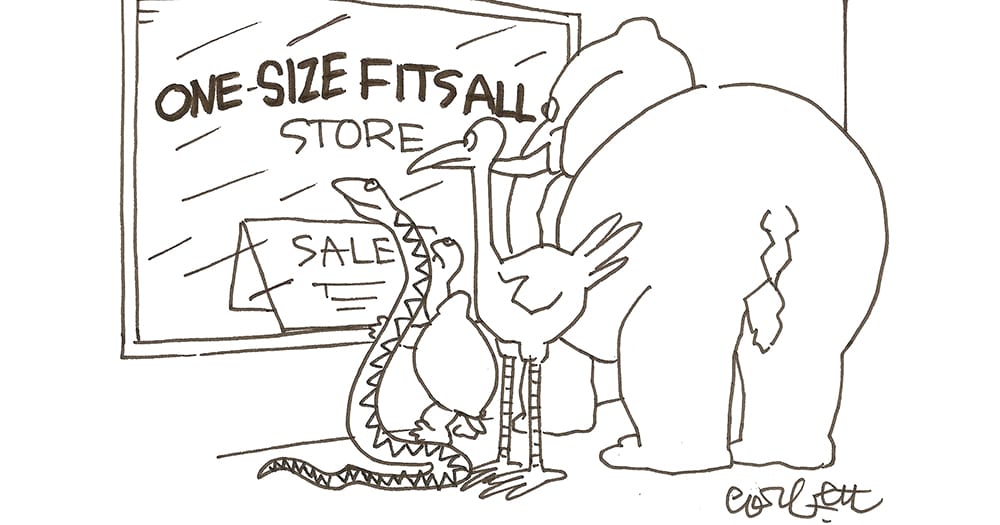
A thoughtful, head-first approach seems to be the way to go. Acting quickly to remain relevant in a fast-paced space, before your competitors beat you to it, has never been more important. Pretend it’s 1970: Look at your advertising budget and think of television spend as radio and digital spend as your new TV budget. It may be extreme but it’s a step in the right direction. To be integrated and effective in the age of digital convergence, your content marketing, online ads, UX design, branding, ecommerce conversion clickstreams and yes television if you can afford it, all have to align with your overall strategy. One Facebook post a week by Shane in marketing is not going to cut the mustard.
And when you get into the nitty gritty, there are already plenty of lessons out there about how not to do digital — whether the spend is big or small.
Now there’s no problem with different sized budgets, but if you’re offering to pay for a pushbike and expecting a motor and five seats, you and your business have a rude awakening coming your way.

We all remember what happened with Pepsi last year. Somehow, someone thought it would be a good idea to make Kendall Jenner the ambassador for all issues of public protest and for Pepsi to be the deus ex machina that sweeps in to save the day. That campaign will go down in history as one of the all-time strikeouts of advertising.
And how about Unilever’s ‘racist soap’ ad for Dove? The thing is — it’s rarely bad intentions that kill an ad, but a lack of thought for how digital audiences perceive the world and communicate with one another. The audience network is a titanic beast, and if the message is insincere enough to be twisted, it will be.
The guiding rule seems to be that it is essential that your product is an accessory to the stories you tell and not the focus. When people are actively choosing what they watch, the last thing they want is a brand being shoved down their throats.
Finding the sweet spot
Heineken led the way in 2017 with their own take on how assert your brand in the domain of political discussion online with the #OpenYourWorld campaign. This highly debated ad made a much better pass at what Pepsi tried by presenting Heineken as the beer to drink while discussing differences, rather than the solution to all the world’s problems.
It doesn’t all have to be Facebook and YouTube either. Working in digital, I’ve become increasingly jaded with Facebook’s glorious algorithm and its seemingly wondrous ability to bleed you of money without really giving you what you want. If you don’t have an audience who’s already desperately seeking your brand, Facebook can be a hard road to travel.
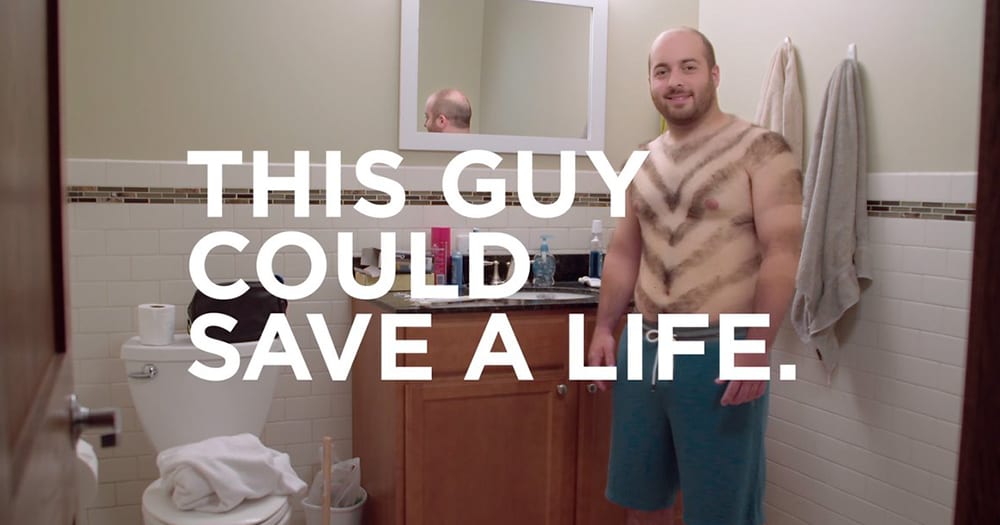
Be The Match, a non-profit focussed on bone marrow donation, led the way in off-piste digital advertising last year. The ‘Be The Guy’ campaign launched on Reddit and Twitter as a simple series of banner ads, resulting in a 280% increase in male donors aged 18–24.
The key, once again, was that the call to action was secondary to the story being sold. The focus was still on getting young men to register, but the visual was very much about capturing attention by showing that anyone — deviant or saint — could save a life.
None of these — good or bad — were spare change commercials. Industry leaders have been using the digital space to its full potential and reaping the rewards for years now, and it’s time for the rest of the marketing and advertising world to do the same.

The era of spare change digital advertising is over.
Why spend less on digital when it can do so much for your brand? Information consumption today is a strange...
Read more
Why your digital agency sucks (kind of) and how to fix it.
Hear me out and maybe we can begin to change some bad habits.
Having spent the last couple of years working across a number of agencies (digital and creative) I have come to the conclusion that your digital agency probably sucks, and it’s likely your own doing.
“To make more money you need to make the hamster wheel bigger. To get to ‘bigger’ and maintain it, everyone including you needs to run furiously faster.” – Jules Ehrhardt, ustwo
This is the agency model, a perpetual cycle of growth maintained by the scrambling and otherwise panicked movement of junior and mid-weight staff. It is a model that flourished in the early days when clients didn’t understand what the internet was and why social media might just be important in the future.
There are two forces at work contributing to the decline of effectiveness in digital. One is the hamster wheel and the other is best summed up by this quote from astronaut John Glenn:
“As I hurtled through space, one thought kept crossing my mind — every part of this rocket was supplied by the lowest bidder.”
Over the years I have been involved in countless pitches and strategies in the digital space and one thing has become abundantly clear. We suck at articulating what we do. The carry over effect of this is that innumerable clients are seeking the lowest cost agency possible. Digital is being treated as a necessary add-on instead of a solution. Gotta have that sweet Instagram page right?
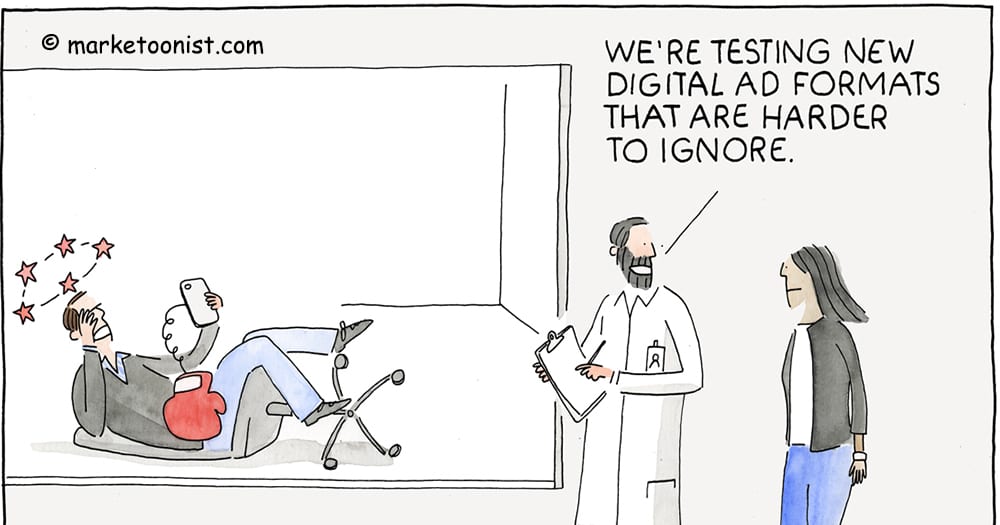
But that’s okay, it just means our hamsters will have to run a little faster and work a little longer. What this actually means is turning everything into a template. Including strategic solutions as well as operations and staffing. Now this isn’t necessarily the worst thing in the world, however when the by-product is quality we need to stop and think about how we want to operate.
To put it another way, clients are asking agencies to build them a three story house but only giving enough money to build a one story unit and then asking whether the third story balcony will be ready in time for Summer cocktail parties. Stop kidding yourself, you cannot spend $3,000 a month and expect to be the next powerhouse in your industry. There is no magic wand and don’t believe anyone that purports to have one.
Then there is us.

It has become abundantly clear that digital agencies around the world are promising results that a client’s budgets simply can not allow for. And we aren’t being honest about it. In order to keep the hamster wheel growing we are over-reaching and then finding nuanced ways to imply it was the clients fault. It’s everyone’s fault, but in this instance it is our responsibility to say no, your budget does not allow for a three-story house. And besides, you probably only need a two-story unit (pool optional of course).
How do we fix this never-ending cycle of bad work and unhappy clients you ask?
The reality is that it’s a big problem with even bigger implications, but some things are crystal clear and I have listed them below.
As I hurtled through space, one thought kept crossing my mind – every part of this rocket was supplied by the lowest bidder.
For Clients
Understand where you are in the history of your business. This means having clearly defined goals that your staff are aligned with.
Be aware that a good agency will provide a solution that fits the problem, remember there is no magic wand.
Stop comparing yourself to the cream of the crop to brands that have been in the digital space for longer than you, spending significantly more time and money.
Understand the value of a digital agency. If you think of it as a necessary evil then sure the lowest bidder might be a good option. If not, value the money you spend and its ROI.
For Agencies
If you can’t deliver to a clients ambitions due to budget/technical restraints then say so. Make it really, really clear.
Stop presuming the work you did for one client will translate to a different one because they share an industry. If your solution isn’t unique each time you are letting yourself and the client down.
Say no. If you are being asked to do work that will have no value other than burning through budget, tell the client no, you are the experts after all.
Saying your digital agency sucks was probably a bit harsh (read: probably) but there are problems across the industry that need to be addressed from both sides. If not we are doomed to a never-ending hamster wheel of forking out money and not delivering.

Why your digital agency sucks (kind of) and how to fix it.
Hear me out and maybe we can begin to change some bad habits. Having spent the last couple of years...
Read more
The era of spare change digital advertising is over.
And so, the natural reaction has been a conservative approach. Many businesses feel that they should pay less for digital content than regular advertising, fitting it into their budgets as an afterthought. Others expect free work as proof of concept – an exercise in quality control which would hardly happen in the world of television.
The issue here is that quality and results should be the outcome of budget, creativity and planning — not a one-size-fits-all Cinderella shoe. The notion that one format should work effectively across multiple businesses (or even multiple industries) in the digital sphere borders on insanity.
Yet the expectation of results still always seems to follow.
Now there’s no problem with different sized budgets, but if you’re offering to pay for a pushbike and expecting a motor and five seats, you and your business have a rude awakening coming your way.
So how do you begin to tackle the complex systems and reactions?
A thoughtful, head-first approach seems to be the way to go. Acting quickly to remain relevant in a fast-paced space, before your competitors beat you to it, has never been more important. Pretend it’s 1970: Look at your advertising budget and think of television spend as radio and digital spend as your new TV budget. It may be extreme but it’s a step in the right direction. To be integrated and effective in the age of digital convergence, your content marketing, online ads, UX design, branding, ecommerce conversion clickstreams and yes television if you can afford it, all have to align with your overall strategy. One Facebook post a week by Shane in marketing is not going to cut the mustard.
And when you get into the nitty gritty, there are already plenty of lessons out there about how not to do digital — whether the spend is big or small.
Now there’s no problem with different sized budgets, but if you’re offering to pay for a pushbike and expecting a motor and five seats, you and your business have a rude awakening coming your way.
We all remember what happened with Pepsi last year. Somehow, someone thought it would be a good idea to make Kendall Jenner the ambassador for all issues of public protest and for Pepsi to be the deus ex machina that sweeps in to save the day. That campaign will go down in history as one of the all-time strikeouts of advertising.
And how about Unilever’s ‘racist soap’ ad for Dove? The thing is — it’s rarely bad intentions that kill an ad, but a lack of thought for how digital audiences perceive the world and communicate with one another. The audience network is a titanic beast, and if the message is insincere enough to be twisted, it will be.
The guiding rule seems to be that it is essential that your product is an accessory to the stories you tell and not the focus. When people are actively choosing what they watch, the last thing they want is a brand being shoved down their throats.
Finding the sweet spot
Heineken led the way in 2017 with their own take on how assert your brand in the domain of political discussion online with the #OpenYourWorld campaign. This highly debated ad made a much better pass at what Pepsi tried by presenting Heineken as the beer to drink while discussing differences, rather than the solution to all the world’s problems.
It doesn’t all have to be Facebook and YouTube either. Working in digital, I’ve become increasingly jaded with Facebook’s glorious algorithm and its seemingly wondrous ability to bleed you of money without really giving you what you want. If you don’t have an audience who’s already desperately seeking your brand, Facebook can be a hard road to travel.
Be The Match, a non-profit focussed on bone marrow donation, led the way in off-piste digital advertising last year. The ‘Be The Guy’ campaign launched on Reddit and Twitter as a simple series of banner ads, resulting in a 280% increase in male donors aged 18–24.
The key, once again, was that the call to action was secondary to the story being sold. The focus was still on getting young men to register, but the visual was very much about capturing attention by showing that anyone — deviant or saint — could save a life.
None of these — good or bad — were spare change commercials. Industry leaders have been using the digital space to its full potential and reaping the rewards for years now, and it’s time for the rest of the marketing and advertising world to do the same.
The era of spare change digital advertising is over.
Why spend less on digital when it can do so much for your brand? Information consumption today is a strange...
Read more
Why your digital agency sucks (kind of) and how to fix it.
Hear me out and maybe we can begin to change some bad habits.
Having spent the last couple of years working across a number of agencies (digital and creative) I have come to the conclusion that your digital agency probably sucks, and it’s likely your own doing.
“To make more money you need to make the hamster wheel bigger. To get to ‘bigger’ and maintain it, everyone including you needs to run furiously faster.” – Jules Ehrhardt, ustwo
This is the agency model, a perpetual cycle of growth maintained by the scrambling and otherwise panicked movement of junior and mid-weight staff. It is a model that flourished in the early days when clients didn’t understand what the internet was and why social media might just be important in the future.
There are two forces at work contributing to the decline of effectiveness in digital. One is the hamster wheel and the other is best summed up by this quote from astronaut John Glenn:
“As I hurtled through space, one thought kept crossing my mind — every part of this rocket was supplied by the lowest bidder.”
Over the years I have been involved in countless pitches and strategies in the digital space and one thing has become abundantly clear. We suck at articulating what we do. The carry over effect of this is that innumerable clients are seeking the lowest cost agency possible. Digital is being treated as a necessary add-on instead of a solution. Gotta have that sweet Instagram page right?
But that’s okay, it just means our hamsters will have to run a little faster and work a little longer. What this actually means is turning everything into a template. Including strategic solutions as well as operations and staffing. Now this isn’t necessarily the worst thing in the world, however when the by-product is quality we need to stop and think about how we want to operate.
To put it another way, clients are asking agencies to build them a three story house but only giving enough money to build a one story unit and then asking whether the third story balcony will be ready in time for Summer cocktail parties. Stop kidding yourself, you cannot spend $3,000 a month and expect to be the next powerhouse in your industry. There is no magic wand and don’t believe anyone that purports to have one.
Then there is us.
It has become abundantly clear that digital agencies around the world are promising results that a client’s budgets simply can not allow for. And we aren’t being honest about it. In order to keep the hamster wheel growing we are over-reaching and then finding nuanced ways to imply it was the clients fault. It’s everyone’s fault, but in this instance it is our responsibility to say no, your budget does not allow for a three-story house. And besides, you probably only need a two-story unit (pool optional of course).
How do we fix this never-ending cycle of bad work and unhappy clients you ask?
The reality is that it’s a big problem with even bigger implications, but some things are crystal clear and I have listed them below.
As I hurtled through space, one thought kept crossing my mind – every part of this rocket was supplied by the lowest bidder.
For Clients
Understand where you are in the history of your business. This means having clearly defined goals that your staff are aligned with.
Be aware that a good agency will provide a solution that fits the problem, remember there is no magic wand.
Stop comparing yourself to the cream of the crop to brands that have been in the digital space for longer than you, spending significantly more time and money.
Understand the value of a digital agency. If you think of it as a necessary evil then sure the lowest bidder might be a good option. If not, value the money you spend and its ROI.
For Agencies
If you can’t deliver to a clients ambitions due to budget/technical restraints then say so. Make it really, really clear.
Stop presuming the work you did for one client will translate to a different one because they share an industry. If your solution isn’t unique each time you are letting yourself and the client down.
Say no. If you are being asked to do work that will have no value other than burning through budget, tell the client no, you are the experts after all.
Saying your digital agency sucks was probably a bit harsh (read: probably) but there are problems across the industry that need to be addressed from both sides. If not we are doomed to a never-ending hamster wheel of forking out money and not delivering.
Why your digital agency sucks (kind of) and how to fix it.
Hear me out and maybe we can begin to change some bad habits. Having spent the last couple of years...
Read more